Showing posts with label Sencha. Show all posts

Saturday, December 22, 2012

2012 Sencha Kaori & Some Thoughts on “Perfect Teas”


Christmas holiday, finally. At last, I should have enough time to talk about all the interesting teas that have been accumulating on my shelf for quite a while.
Let's start with yet another Katahira – or let's get back to Katahira, to be more accurate. Here's a tea from this great Nunosawa, Shizuoka-based producer I haven't talked about yet – a tea, which is, among his classic Senchas, presumably of the highest grade.


Purchased from Pu-erh.sk quite a while ago, Sencha Kaori was picked in May 2012 and is a blend of four different breeds - 30% Ó Iwase, 30% Meiryoku, 20% Yamanoibuki, 20% Saemidori.
Its leaves are long, light-steamed shiny green needles, very beautiful and obviously processed with great amount of care. They have a sweet, fine smell; one that is fresh, fruity and creamy.


The first infusion is light-yellow in color and gets gradually more opaque as it cools down. Its taste is sweet, very refined, deep and complex – from tones of ripe fruit, such as pears and gooseberries, to sweet cream, milk and vivid umami, almost reminiscent of half-shaded or shaded teas. These notes are continued in a long, mouth-filling aftertaste, again very deep and sweet, though also fresh and very fruity.


The second infusion is yellowish-green in color, very clear and slightly cooler in taste. Again, tones of fruit, sweet cream, umami, deepness and overall refinement. A medium-long aftertaste; slightly lighter than before, more refreshing and, for a second brew, still very sweet without any sharp notes.
Two more infusions are made of these leaves; the third one still a deep, complex brew with sweet fruity and creamy notes, getting just a bit drier in the ending.
The fourth, the final – light green color, a lighter, drier and simpler taste, less deep, though still mostly fruity, creamy and very clear. This taste stays in the mouth for along time, the aftertaste still doesn't get any less refined. All the sweetness and creaminess previously encountered, still not planning to leave. Impressive.  


I've purposely made the taste notes shorter this time to get to the question already mentioned in the name of this post - this tea seems almost perfect. Sometimes I think it's too perfect, actually. There's this thing about such high-grade, traditional Sencha teas, especially the blended ones – they are very refined and good from all points of view, mostly, which, actually, detracts a bit of surprise from the experience. It is important to say that this has nothing to do with quality of tea in any way – it's just a matter of personal preference. I seem to enjoy teas that are able to surprise me, teas that get stuck in my mind for whatever reason more than teas which are just great – in a classic, conservative, traditional way. Just one example, purposely from the same producer – Sencha Tsuyuhikari.
This tea, Sencha Kaori, tastes exactly how it's supposed to taste. Exactly how a Sencha of such a high grade is supposed to taste. There is absolutely nothing wrong with that.
It's just that sometimes I think tea is quite similar to people. When you're around someone who is perfect all the time, there is quite a high chance you are going to get bored.
Of course, these teas are not meant to be consumed every day, so such case probably isn't going to happen.

This is definitely a great tea. Try it, drink it, enjoy it. You won't be disappointed.
You might not be surprised. But, after all, that is not what these teas are meant to do.


Sunday, November 18, 2012

2012 Sencha Tsuyuhikari


Yet another Houkouen tea – Houkouen is the name of a company operated by Mr. Katahira, a well-known Shizuoka farmer and producer.
Purchased from Slovak shop Pu-erh.sk, this Sencha is made of a single cultivar – Tsuyuhikari. Again, a classic in Mr. Katahira's offering, Tsuyuhikari is a breed grown mostly in mountainous areas of Shizuoka.


This tea was picked in May 2012 and comes in a form of some really nice, shiny, long green needles. These leaves have a lovely fresh smell with tones of young fruit; this smell seems to be slightly lighter and fresher than that of most Sencha teas by Mr. Katahira (maybe with the exception of Koushun, which I will talk about soon, hopefully).


The first infusion is yellow in color, slightly opaque and has a refreshing, clear taste with tones of green grapes, young peas and overall freshness. This tea is sweet, but not too sweet; also, being as refreshing as it is, its taste is surprisingly deep and refined. It lacks any astringency and instead leaves a long, evolving aftertaste which fills the mouth with fruity coolness, mild sweetness and a very well-balanced amount of light, green freshness.


Just few seconds of brewing for the second infusion; the resulting cup is once again yellow in color, though now more transparent. Its taste is slightly sharper, warmer, dominated by tones of autumnal fruit – apples, mostly. There are also some nutty and slightly spicy tones – and even with all these notes, the freshness is still here, especially in the aftertaste. It feels almost like a surprise – after such a warm brew, the aftertaste feels unusually cool and refreshing. Another part of this tea's interesting character.

The third infusion marks the return of first brew's character, being lighter, almost greenish-yellow in color, transparent and pure in taste with overall lightness, freshness and tones of grapes, pears, young peas and just slight nuttiness. Somehow, this one is the sweetest of all infusions. The following aftertaste: moderately long, mild and refined. Fruit, sweet cream, freshness.


One more brew is prepared. Greenish-yellow, completely transparent, warm in character and quite simple; this is a nice, nutty finish with mild woody and spicy nuances. Warm enough not to leave you cold even on a chilly November day like this.


Sunday, October 21, 2012

One Evening


One evening, one lovely tea, one favorite place of mine - the 2012 Sencha Sayamakaori Miyazaki at Avra Kehdabra teahouse in Bratislava.
Enough words.


Thursday, October 11, 2012

2012 Sencha Kouchi


Another Sencha from Teamountain's offering – this time, a humbler, inexpensive one. Purchased from Slovak shop Nomad, this Yabukita-breed tea comes from a less-known area of Kōchi prefecture, located on Shikoku island – which made me even more curious about it.


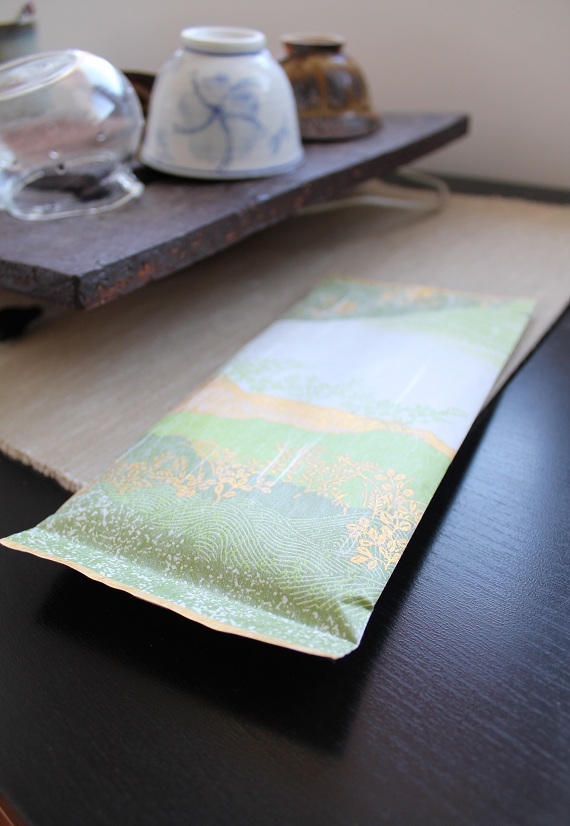
Packed in a typically beautiful golden-yellow bag, its leaves come in a form of surprisingly good-looking, long Asamushi needles. They emit quite a simple, fruity smell with notable freshness.


With such humble tea, humble, simple character is what I expect and desire. This tea fulfills the expectations for a good everyday Sencha – it remains steadily enjoyable during all infusions, having a mostly sweet, well-balanced taste with notes of green grapes, nuts and milk. No traces of bitterness – or anything unpleasant, actually. It leaves an equally simple, sweet aftertaste, which doesn't last too long, but feels pleasant and refreshing nevertheless. One thing worth noting is that its character really seems different – it didn't remind me of teas from Shizuoka, Uji or Kyushu, instead being quite original on its own. It might be interesting to look deeper into tea production of Kōchi, for me a completely unexplored area before this tea (at least as far as I can remember, for my memory isn't always that reliable).


For me, this tea was a nice surprise among this year's offering of inexpensive Japanese teas. This post isn't going to contain any more words, just one sentence to sum it up: it's simple, it's good.


Friday, August 10, 2012

2012 Sencha Harukaze


On my recent trip to Brno, I have finally tasted and purchased some 2012 Japanese green teas. Visiting both of my favorite teahouses, I first enjoyed tasting Teamountain's Sencha Tsuyuhikari in Sklenena Louka (previously mentioned here) and then bought some other teas – also from Teamountain – for home consumption in Probuzeny Slon.
Sencha Harukaze is a light steamed tea from Shizuoka, grown by Mr. Katahira, whose teas have been in Teamountain offering for years and have been mentioned many times on this blog. However, last year saw unavailability of these teas as well as most other teas from Shizuoka – this year, though, all of Katahira's teas successfully passed radiation tests as safe and are, to my delight, back in offering.


Harukaze is a blended tea, consisting of three different breeds - 75% Yabukita, 15% Okumidori and 10% Kurasawa. Its leaves are good-looking, long, shiny green needles, typical for good Asamushi teas.
They smell fresh, fruity and deep – a bit like young, unripe peaches and grapes.


Water is cooled down for the first infusion which is light yellowish-green, mostly clear with just a slight opaqueness and fresh, sweet smell. This applies to taste as well – it's very sweet, mouthfilling, fruity and somehow heavy – heavier than many other fresh Sencha teas, this one inclines towards a taste bit reminiscent of grape must. Still, it's very refined and pure, with vivid freshness of a tea made just recently. The following aftertaste is a long one, slightly astringent (in a good way though) and reminded me of fresh red currant.


The second infusion is poured down immediately and shows typically greener, though still very clear infusion and sharper character. The taste of red currant and unripe grapes gets stronger, followed by a much cooler mouthfeel than before, giving the tea a new, very refreshing note. Its aftertaste has similar character – it's shorted and less mouthfilling as well as less sweet than that of the previous brew, but instead much cooler and fresher with predominant tones of young fruit and a small trace of sweetness.
The third infusion gets back to the more refined character of the first one, though being a bit drier and with a subtle woodiness. It also lacks most of the previously found sweetness, now being simpler and more refreshing than the previous brews with a shorter aftertaste.


One more brew is made of these leaves, now a very simple, refreshing drink with clear light-yellow color and spicy and woody tones in taste. A satisfying last sip.


Finally, a short note on some new members of my tea-ware collection, as seen in this post – I recently got three of these little teacups from Petr Novak during Bratislava's Festeaval. A beautiful, handmade thin white porcelain which evolves with every use, showing new cracks all over its surface, gradually creating a thick spiderweb – it is always a pleasure to watch tea ware live its own life like this, encouraging me to use it as often as possible.


Wednesday, May 9, 2012

2012 Organic Kagoshima Shincha Saemidori at Avra Kehdabra

(sorry for the blurry photo, it was taken by phone)


It's that time of the year again - I'm at my favorite teahouse in Bratislava, Avra Kehdabra, enjoying first sips of Yuuki-cha's 2012 Organic Kagoshima Shincha Saemidori, for me the first Shincha this year.
So far, it really gives me a feeling that this season is going to be promising!


Friday, March 2, 2012

Awaiting the Season with 2011 Sencha Yabukita Miyazaki


Seems like the spring is already beginning here in the middle of Europe. For the last week or so, we've been enjoying mild, awakening sun and and pleasant temperatures, allowing us to stay outside more than before. This weather naturally also awakens my desire for fresh, spring green teas – these aren't available yet, though, but luckily, there still are some last year's green remains worth drinking before the season begins.

The tea I'm going to talk about today is an inexpensive one; from Teamountain's regular offering. It originates in Miyazaki prefecture of Kyushu island, is made of first flush Yabukita leaves and is medium-steamed (chumushi). What distinguishes it from most regular Sencha teas is the fact that this one was shaded for a few days before picking, putting it somehow on a halfway between Sencha and Kabusecha.


The appearance of these leaves seems to correspond with its chumushi processing – there are some longer needles, though most of them are quite short. Other than that, they are shiny, ranging from light to dark-green and with very sweet, fruity and almost caramel-like smell, somehow unusual for Sencha - I suppose this is a result of shading.


The first infusion is lively green in color, very clear and smells even sweeter than the dry leaves. Its taste, though, is quite different – very refreshing, light and not so sweet, with mild tones of nuts, slight spiciness and fruit – though, in this case, as opposed to the smell which reminded me of ripe fruit, in taste it's something young and refreshing. The aftertaste is medium-long, pleasantly mild and made of various nuances; hazelnuts, caramel and white grapes.

The second infusion is brewed with slightly hotter water and has a bit more opaque green appearance and sweet smell. This time, the taste is sharper, greener and even more refreshing than before, though I've noticed one thing while drinking this brew – while refreshing, this tea lacks the cooling character many Sencha teas have, especially during spring and summer. Instead, this one feels warmer, nuttier and even a little bit roasty. Once again, I think this might be a result of shading – and it indeed ads to the tea's unusual character. The aftertaste is very long, full, fruity and nutty with enhanced sweetness, when compared to the previous brew.


In terms of color, the third infusion is similar to the first, being light green and transparent. Its taste is crispy, nutty and roasty; compared to previous brews, it lacks most of the refreshing tones. Now, the main tone seems to be reminiscent of freshly baked bread, slightly sweet and mouthfilling. The aftertaste is shorter, though still very pleasant and offers the former sweet, caramel-like and ripe-fruit tones, mainly of plums.

One more infusion is prepared with significantly hotter water; its clear, light-green brew gives simple, slightly woody and roasty taste and quite a warm overall feeling.


This everyday Sencha is one of the teas making my wait for first teas of 2012 at least a little bit easier. I'm quickly running out of it, though; but then, it's already March, the sun is shining and fresh Chinese greens are soon to be seen (and tasted), I believe.


Friday, September 23, 2011

2011 Kagoshima Sencha Asanoka Kirishima


This is the second of two fresh Japanese Teamountain tea I've ordered from Nomad.sk – while I've been familiar with Ureshino Kamairi Tamaryokucha as it is a stable part of TM offering, this one is completely new. It looked very promising from the beginning and I was personally looking forward to tasting it a lot - now, after quite a few of sessions with this unusual tea, I have finally managed to take some photos and transform thoughts into notes.

First thing that caught my attention was the description of this tea itself – hand-picked, Asamushi (light-steamed) Sencha grown in former Makizono town near Kirishima mountain in Kagoshima, Kyushu by quite a well-known producer Mr. Nishi, whose teas are often participating in various competitions. Moreover, this tea is made of Asanoka cultivar – one of the newer, less common varietals cultivated in southern Japan. Asanoka is said to be a crossbreed of Yabukita and some Chinese cultivar from Jiangxi and is characterized by its mildness and umami, therefore being suitable for production of shaded teas – I remember seeing Kabusecha made of this varietal, but this is probably the first Asanoka Sencha I've ever came across.


Packed in a beautiful white bag typical for most high-grade Teamountain Japanese teas, these shiny, dark-green leaves are a little bit more fragmented than usual light-steamed teas, though there is a lot of beautiful, long and narrow needles among them as well. Their smell is very soft, fresh and sweet, reminding me of young peas – that kind of mild, fresh and lively sweetness.

When placed into the preheated Shiboridashi, this smell gets stronger, sweeter and deeper, being slightly reminiscent of shaded teas, such as Kabusecha and Gyokuro.


The first infusion is completely transparent and beautifully jade-green; its smell is light, fruity and noble while its taste is full of umami, creamy sweetness, milkiness and freshness. It seems like this Sencha stands out of all the fresh Japanese teas I've tried out so far this year – it's very mild and full at the same time and has a vivid umami base very similar to that of young peas – both in smell and, even more pronouncedly, on tongue. This Sencha truly has some characteristics typical more for Gyokuro than Sencha; the already mentioned umami and deep sweetness, among others. Its aftertaste is long, light and yet mouthfilling, quite milky and fresh. Also notable, this tea has a non-negligible effect on mind and body, but not too strong – it slightly awakens the senses and makes mind focused, though, at least in my case, it isn't the suitable-for-work kind of focus – rather than that this tea seems to make mind better focused on the tea itself, somehow even enhancing the session.


The second infusion is brewed with slightly hotter water for only five seconds and is still very transparent, more yellowish-green and sharper in taste, fruity and still sweet. The creamy and milky tones are a bit weakened and covered by new tones reminiscent of fresh, wild strawberries and white grapes, together with once again dominant note of young peas and umami. The aftertaste is longer, sharper and more mouth-filling that that of its predecessor, now being more typical Sencha-like rather than having similarities to shaded teas.

The third infusion emits vivid green color with slight jade-like undertones. Its taste is milder than that of the second brew, though it also partially lacks the vivid umami and milky sweetness, now being dominantly fruity and a little bit spicy. Its taste is refreshing and, literally, very green, while the aftertaste is a bit shorter and less pronounced than before, also mainly fruity and sharp.

The last infusion is still beautifully green in color and completely transparent, while its taste is comprised of woody, sharp and slightly astringent tones with only a short aftertaste – still very enjoyable and refreshing, though.


So far, it seems like this unusual Sencha has become my personal favorite among all the 2011 Japanese teas I've tasted so far. While I can't say that the other teas were of any significantly lower quality, this one just stands out, being different and unconventional. There are, though, still a lot of teas to try; considering the fact that this is obviously a strong year for Japanese tea, there still is a high chance I will come across, at least, equally interesting and likable teas – I can't wait for it.


Wednesday, July 27, 2011

2011 Zencha Nakai's Organic Uji Sencha Matsu


It's already been some time since this tea arrived to my place; more than three weeks, to be accurate. Since then, various things continuously prevented me from writing about it, most commonly those related to weather – for me, the best occasion on which to enjoy a good fresh green tea is a sunny, warm day, but the last week and a few more days before it somehow lacked this kind of weather almost completely. If there was a warm, sunny and free day, I usually haven't stayed at home and went somewhere out (such as the FesTEAval) and, therefore, the days left for me when I had time to stay at home and write about tea were usually those filled with cold air, rain, dark clouds and lack of natural light, during which I mostly weren't in mood for anything green and rather switched to roasted oolongs and puerh.

Today, finally, sun decided to shine a bit and the temperature is noticeably higher as well. There is an advantage of all the time I kept waiting for the right occasion to write about this tea – since it arrived, I've tasted it quite a lot of times (though mostly only as a quick morning session without that much time to concentrate on the tea itself), which helped me to make up my mind about this not-so-usual Sencha.


This light steamed Sencha comes from Mr. Michio Nakai's farm located in my favorite region, Uji, Kyoto and is certified organic. In Zencha's offering, it is the middle grade of Uji Sencha. Its leaves are a bit shorter and more broken than those of usual Asamushi teas, but still quite nice and shiny. Their smell is very fresh, very sweet and unusually nutty and creamy, much more than most Uji Sencha teas. There is also a slight hint of roastiness; overall, aroma of this tea unexpectedly reminds me of fresh Long Jing quite a lot.


The first infusion is yellowish-green in color and has a mild sweet smell and full, balanced taste, again different from what I'm used to find in most Uji teas – this one is much more bread-like, nutty and roasty, while still being very sweet. In this case, however, it isn't the typical Gyokuro-like, umami related sweetness, but instead something very reminiscent of sweet pastry or even freshly baked cookies. Just as smell, this tea's taste reminds me a bit of Chinese Long Jing while still bearing some typical Uji notes – very interesting combination of different characters. Aftertaste of this infusion is long and mouth-filling, mostly nutty, vivid and yet quite refined.

The second infusion is brewed with a bit hotter water for just a few seconds, resulting in much greener brew, which is now a little bit opaque. Its taste is basically very similar to that of the first infusion, though it now has a bit more fresh, “green” note of sharpness, making the taste of this brew more refreshing. The aftertaste is also a bit sharper and greener, but still very sweet and subtle.


Once again a little hotter water is used for the now mostly yellow third infusion, enhancing the already dominant bread-like, sweet taste and smell. The aftertaste is even stronger and longer-lasting than that of the previous infusion, now being quite crispy, sweet and slightly astringent, though not in any unpleasant way.

One more infusion is made of these leaves; this time, the taste is mostly woodsy, roasty and a bit astringent with less profound aftertaste – nicely finishing the session.


This tea is definitely different in an interesting way. While the vast amount of Uji greens tend to be on the deep, umami side of taste, this one, with its bread-like roasty character, is a nice, unconventional change – and still, it has the typical feeling of a good, traditional Ujicha.


Tuesday, December 28, 2010

Christmas & 2010 Sencha Fukamushi Yabukita 3rd Prize Winner


There is something about spending Christmas in the countryside; something one can hardly achieve in the city. This year, we decided to move for the holidays to our house located in a lovely little village to the north of Bratislava, near the town of Myjava. This house is located close to the forest in a quiet mountainous area (the upper picture is taken right in front of its door); together with a bit of snow, this resulted in really magical Christmas.

I've returned to Bratislava three days ago and decided to write one more post this year today.


Just like the competition grade Gyokuro Saemidori I wrote about in previous post, a sample of this tea was kindly sent to me by Martin Spimr of Teamountain. Originating in Shizuoka and picked in May from Yabukita cultivar, it competed in National Tea Competition of Japan, where, with an amount of f 186 points out of 200, it received the third prize in Fukamushicha category.

The package is opened and reveals leaves, which are typically short as a result of deeper steaming; what is unusual on these, however, is their color – light green, almost yellow, yet still shiny and overally very attractive. Their smell is very humble, fresh, predominantly fruity and has tones of apricots, peaches and blackberries.


Because of the higher fragmentation of its leaves, this Sencha is prepared in a small kyusu with mesh filter instead of my favorite shiboriashi. The first infusion is very opaque and has color similar to that of dry leaf – yellowish green. Its taste is very fruity, complex, with vivid hint of umami and freshness, which somehow reminded me of Nunosawa Shincha I'd been enjoying at the beginning of this summer.

The second infusion is brewed only for a short while, resulting in even more opaque, almost non-transparent yellow color and very smooth, harmonic and complex taste with tones of young fruit, milk and umami. The overall feeling of this infusion is a bit warmer, less fresh and lacks the similarities to Shincha. The aftertaste is very humble and mild, quite sweet and once again predominantly fruity.

The third infusion is similar to the second in color and its vivid opaqueness. While still maintaining the fruity sweetness and umami of previous infusions, this brew is now a bit sharper, mouthfilling and somehow heavy.

One more infusion is made of these leaves, resulting in a bit woodsy, warm brew and fruity, full aftertaste, already a bit flat.


I have to admit that I'm not a big fan of Fukamushi teas – I tend to avoid them because of their almost aggressive sharpness and something I would call “fake deepness”. Purity and complexity of Asamushi somehow seems to fit me better. This tea, however, is an exception to some extent, being unusually humble and harmonic, even in further infusions.

May the new year be really successful and filled with good tea and happiness for all of you.


Thursday, December 16, 2010

2010 Gokuchanin Bihakkou Sencha Sayamakaori 1


For Yoshiaki Hiruma, famous Temomi master from Saitama prefecture and a great experimentalist, creating various kinds of oolongs called Hanhakoucha obviously wasn't enough – he even went so far as to invent and start producing tea, which undergoes the process of slight withering before it's steamed and processed, resulting in an almost green tea, which however already has some of the characteristic notes of lighter oolongs – quite similarly to Taiwanese Bao Zhong.

He named the unique kind of tea “Bihakkou Sencha”; this particular Bihakkou is made of Sayamakaori breed and, for an (at least for me) unknown reason, is labeled “1”.

Just like the Hanhakoucha I've written about some time ago, this tea was brought to central Europe by Teamountain.


In terms of appearance, these needles are just like a typical, high-quality Asamushi Sencha leaves – long, narrow, dark-green and shiny. Main difference from typical Japanese green tea can however be clearly noticed in smell, which is much more flowery rather than being milky, though it also has the tones of butter, fruit (bananas in this case) and nuts. This scent, even though it also has the typical tones of Sencha, really reminds me of Bao Zhong quite a lot.


Slightly hotter water than what I would use for regular Sencha of similar quality is used to prepare the first infusion of this tea, resulting in vivid yellowish brew, quite aromatic in smell. It tastes like no other tea I've ever encountered, beautifully binding the milky, deep and buttery taste of good Sencha with fresh, flowery and fruity notes so typical for Bao Zhong and other lighter Taiwanese oolongs. The aftertaste is long, intensive and very fruity, with nuances resembling bananas and wild berries, among others.

The second infusion has even more yellowish, warm color and full, deep taste with numerous tones of butter, bananas, berries and a slight hint of caramel. It now is even more flowery and aromatic, resembling Bao Zhong as much as possible – even so, this tea still maintains some of the typical Sencha tones and a hint of umami, which I find really interesting.

The third infusion is prepared just as the sun is setting down behind the window and now seems more greenish-yellow and opaque with floral smell, quite intensively ascending from the cups. Its taste is sharper, more spicy and with a bit shorter, yet completely different aftertaste, slight astringent and sweet at the same time. Most of the previously found tones of flowers, fruit and milk are still here, though they seem to be more or less covered by the dominating spicy sharpness.

Astringency is already quite vivid in the fourth infusion, though it still isn't really unpleasant – other than that, this brew is also dominated by spicy, fruity sharpness, has quite warm character and longer aftertaste than the third infusion, which now is simple and fruity.


As it seems to be able to produce more infusions than typical Sencha, this tea is also taken into the fifth and sixth infusions; these seem to be very simple in character and similar to the fourth brew, differing by gradually increasing astringency, woodsiness and sharpness.

After the session, the remaining leaves also demonstrate the unique way this tea was processed – though green in the middle, most of them has brown margin as another result of the slight withering this tea undergoes.


Friday, December 10, 2010

2010 Temomi Iruma


In present day Japan, most of even the highest, competition grades of Sencha are, though often picked by hand (Tezumi), processed by machines. This is related to the difficulty with which Japanese teas (or at last Asamushi teas) gain their uniform, needle-like shape – when done by hand, this process can often take hours. With Japan and its high average salary, it's no wonder that hand-kneaded teas became almost impossible to find, being only a negligible part of the country's tea production.

These completely hand-made teas are called Temomi, meaning “hand-kneaded”.

This particular Temomi comes from Martin Spimr's Teamountain, is packed in a traditional Washi canister and was made by one of famous tea-master Yoshiaki Hiruma (Gokuchanin)'s direct students.

For more informations on how complex and difficult the production of Temomicha is, I recommend you visiting Kohei's great blog, specifically these posts:

http://everyonestea.blogspot.com/2010/10/tea-kneading-workshop-1.html

http://everyonestea.blogspot.com/2010/10/tea-kneading-workshop-2.html

http://everyonestea.blogspot.com/2010/10/tea-kneading-workshop-3-you-steam.html

I also hereby apologize for the following picture spam of which this post is mainly comprised, but there's no helping it.


Just as I expected, these are among the longest, narrowest and most beautiful leaves I've ever seen. They are unbelievably uniform, just like a shiny, plastic dark-green needless, as close to perfection as possible.

Their smell is reminiscent to that of top-grade Senchas, especially to that of this year's Tenryu Tezumi Baraki, yet being even more buttery and heavily fruity.

This smell even intensifies after the leaves are placed into the preheated pot, revealing even more of their noble, fruity aroma.


For such special tea, I decided to use water of quite low temperature, almost similar to that which I would normally use for Gyokuro and enhance the brewing times. This results in the first infusion, which is one of the lightest and clearest brews I've ever experienced, with its light-green tone being almost indistinguishable from white glazing of the teacup. This, however, is in contrast to the infusion's smell, which is much more intense than the smell of regular Sencha brew.

The taste is a story of its own, being light as a feather on one hand, yet deep and mouth-filling on the other; noble and fruity just like the smell, buttery, milky and finishing with long, cool aftertaste, once again predominantly fruity and creamy.

The second infusion is prepared with just a bit warmer water and shorter brewing time, stil having the unbelievably clear, light jade-green color, intensive smell and a bit sharper, warmer taste, which however maintains its light nobility. The tones of milk and butter are now covered by countless notes of various fruit, among which are young light grapes, apples and plums.


A bit warmer water is once again used for the third infusion, before which the leaves are already completely opened, demonstrating their whole beauty. There isn't any significant color change even in this brew – it still is the beautiful, jade-green lightness and clearness. The taste seems to be an interstage between the first infusion's noble mildness and the second's fruity sharpness, showing notes of both. The character is still quite warm, accompanied by tones of fresh, young fruit, creamy milkiness and deep, buttery aftertaste.

The fourth and fifth infusions still have the same jade-green color and are now a bit rough in taste, yet still not unpleasant with tone of woodiness and much drier, though comparably long aftertaste.


After the session, all of these leaves are eaten. Honestly, who would throw away such leaves?