Wednesday, April 20, 2011

2010 Shupping Mushisei Tamaryokucha Competition Grade


With long sunny days and temperatures higher than 20ºC almost everyday, I can finally enjoy Japanese green teas as much as I generally do in summer and autumn. Yesterday, I've already placed an order for my first 2011 Shincha (yes, I am going to drink this year's Japanese teas, despite of recent events) and can't wait for it – but until then, there is still quite a lot of interesting 2010 teas I haven't talked about yet.

This Tamaryokucha is one of them. Purchased quite a while ago in Slovak shop Nomad (though, being originally imported by Czech Teamountain, it carries the original TM label), it originates in Kumamoto province of southern Japan and is made of Sayamakaori cultivar. This specification – as well as the package – may seem very similar to the priced Kamairi Tamaryokucha I talked about in December – both of these teas attended the same National Tea Competition of Japan and are of similar grade (this one scoring 149 points there), yet there is a significant difference between them.

Those fond of Tamaryokucha can probably already tell the difference from names of these teas – Kamairi means that the tea was roasted and shaped instead of steaming to stop oxidation similarly to Chinese greens, while Mushisei teas, just like the one I'm going to talk about today, are steamed, shaped and may or may not then be roasted additionally.


Incredibly fresh smell comes out of the package right as it's opened – properly stored Japanese green teas can stay fresh for quite a long time, even almost a year after production. This scent is very fruity, buttery, sweet and, compared to its Kamairi counterpart, less nutty and more juicy.

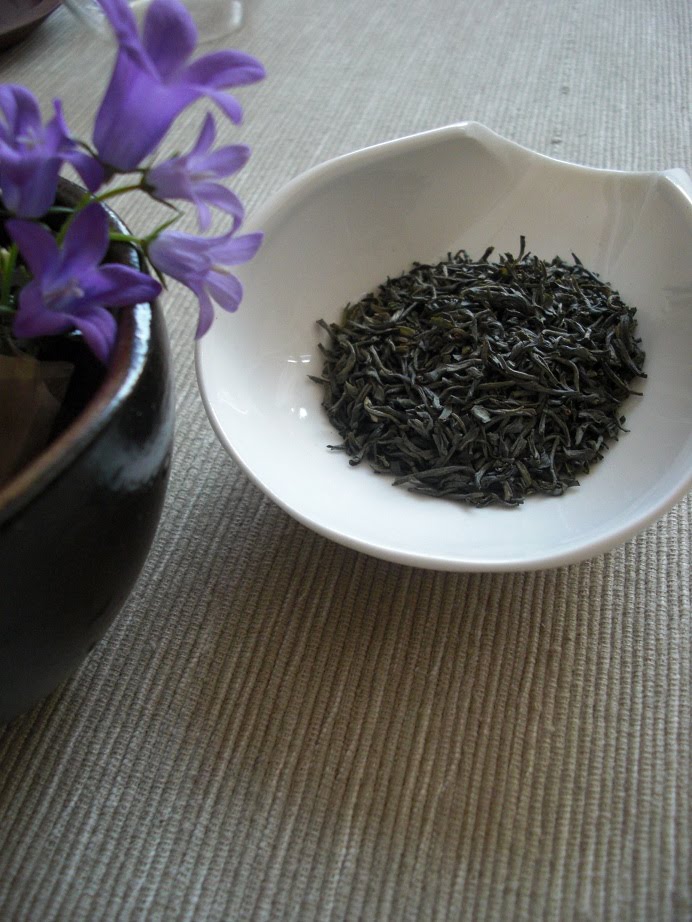
In terms of appearance, these leaves fulfill the expectations for high grade Tamaryokucha, being curly, dark-green and shiny.


As the water gets quite cool, the first infusion is prepared – pale, jade-green and transparent in appearance, smooth and refined in taste with a lot of various tones, most of which are reminiscent of different kinds of fruit. The overall feeling on tongue is buttery, strong yet harmonic and finishing in a long, sweet aftertaste, quite milky and, once again, fruity.

The second infusion is already a bit more vivid in color, which is now yellowish-green yet still very clear; predictably, the taste and smell also gained on intensity, now being less buttery and milky and even more fruity with predominant tones of peaches and canary melon. The aftertaste is a quite mouth-filling and strong, though a bit shorter than after the first brew.

The third infusion is green in color and has quite similar taste to the second one – however, it also reveals some new tones, especially slight spiciness and a hint of woodiness in aftertaste, marking that the next infusion is going to be the last one.

Prepared with quite hot water and extended time, the last brew is a spicy, decent finish to this mild, refined green tea, still showing some of its original pleasant fruity notes and lively freshness.


One of the ways to distinguish Mushisei from Kamairi Tamaryokucha is examining the spent leaves – steamed leaves tend to be softer, lighter green in color and a bit more fragmented than roasted – this tea is no exception.


Thursday, March 31, 2011

The Spirit of Spring: 2011 Yunnan Mao Feng and Hai Nan Bai Sha Lu


As the temperature outside keeps getting more and more enjoyable, air fills with smell of blossoming flowers and ever-present singing birds, we naturally start to crave for something greener, lighter and cooler, something to harmonize the body with tempo of changing weather. Luckily enough, some early-spring first picks of fresh teas are already available – naturally the most suitable and enjoyable option to satisfy the craving.


I've been able to try two 2011 teas so far – Yunnan Mao Feng from Teatrade.sk's offering and Hai Nan Bai Sha Lu from Nomad.sk. Both of these teas were picked in February and both are Chinese, though they originate in different provinces and vary quite a lot in processing.

This post isn't really supposed to compare; its main purpose is just to share the joy.


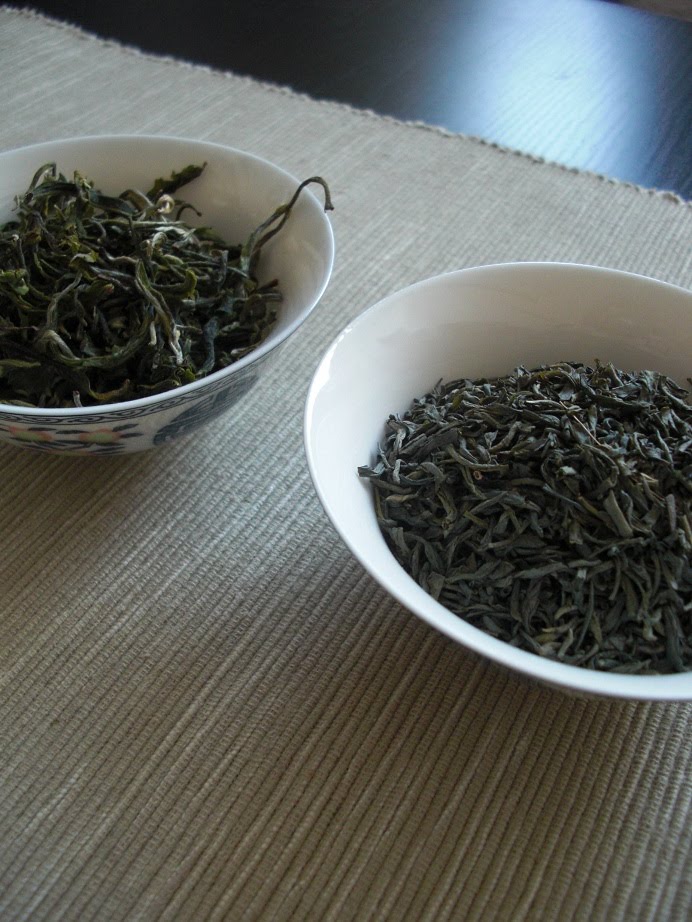
At the series of tea tastings organized by Teatrade last summer, I've got accustomed to preparing fresh Chinese green teas in tall glass cup instead of a gaiwan (though I casually still use it for these teas as well, it just depends on the mood). Their Mao Feng is therefore prepared in this style; its big, curly greenish leaves with quite a lot of young buds are poured into the preheated double-wall glass thermos, immediately intensifying the fresh, flowery and herbaceous smell, so typical for early pan-roasted Yunnan greens.


I use longer brewing times and quite hot water for this Mao Feng; even so, it remains very light, mild and clear, just as the early spring itself. The color of its brew is very transparent greenish-yellow, corresponding with the taste, which is light, smooth, nutty and flowery, cooling in mouth and has slightly buttery aftertaste.


Its freshness is nicely represented by vivid herbaceous note, especially reminding me of green nettle and brew made of its fresh young buds (often consumed in Slovak countryside, especially as a traditional medicament – I don't know about other countries, though).


The second tea is Bai Sha Lu from Wu Zhi Mountain of Hainan, the smallest and southernmost province of China. It's leaves show some characteristics of the way it was processed – in contrast to Mao Feng, these leaves were steamed and chopped, resulting in quite short, uniform appearance and mat, light green color. Their smell is thicker, deeper and fruitier with slight reminiscence of Japanese green teas (which are, after all, processed in a very similar way).


Also prepared in glass, this tea gives yellow infusions, also somehow “thicker” in character, very sweet and complex, pleasantly heavy and with tones of ripe fruit, especially plums and apples. Further infusions also show slight spiciness, especially vivid in aftertaste.

Though this tea is much heavier and less flowery-light than the pan-roasted Yunnan Mao Feng, it also posses the typical spring character, which, however, shows up in a completely different - and likewise interesting - way.


Only few things can bring such peace to mind as drinking fresh tea in the afternoon sun. Judging from these two early birds, it seems like there is definitely a lot to look forward to about this year's harvest in China.


Sunday, March 20, 2011

Friday, March 4, 2011

2010 Gokuchanin Hanhakoucha Choucho


This tea interested me from the first moment when I saw it in Teamountain's offering – another of Gokuchanin's oolongs, once again inspired by famous non-Japanese tea. While the main inspiration of previously mentioned Hanhakoucha Tefutefu was Taiwanese Oriental Beauty, in case of Choucho, it's a whole category if teas - Yancha from Wu Yi. This tea is made of Sayamakaori cultivar, which is quite typical for its native Saitama prefecture. When I saw it in offering of Slovak shop Nomad some time later, I had no doubts and purchased it immediately.


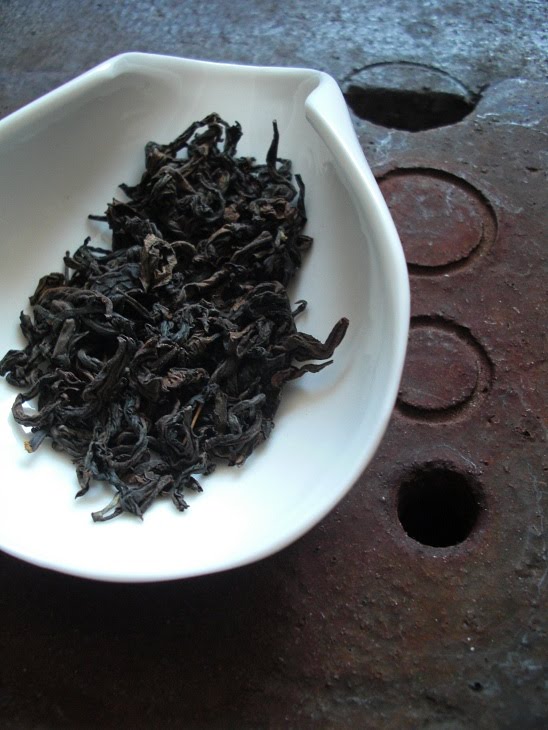
The dry leaves really are reminiscent of Wu Yi oolongs – they are mostly brown, quite dark and curly, though generally a bit shorter than regular rock teas. However, the first big difference can be observed in their smell – very fruity, fresh, light and somehow typically for Gokuchanin's Hanhakoucha in general. They share some notes with Tefutefu as well and, more surprisingly, also with Korean Yellow tea – very interesting indeed. There are no vivid roasty or nutty chocolate tones typical for Yancha.


The first infusion is golden yellow in color, very clear, refined and fruity in taste with dominant tones of sweet, ripe apples and apple juice, plums and a slight umami undertone. The taste is very complex, harmonic and mouthfilling, yet light and refreshing with long, spicy aftertaste lingering on tongue with mild, yet vivid ripe fruity tones.

The second infusion, though brewed for a shorter amount of time, has darker, pure orange color (very whiskey like). It's also a bit more intensive in taste, even more fruity than the first infusion, less refreshing and more warming; still, the tea keeps its noble complexity with dominant fruitiness and, in this infusion, also a hint of pleasant creaminess and citrus fruit. The aftertaste gets even longer after this infusion, being very apple-like and gradually becoming sweeter and sweeter.


The third infusion gets even more orange, though still preserving the clear transparency in color; the taste is very similar to that of the previous brew, just a bit more spicy, intensive and mouthfilling. The creaminess is significantly stronger in this infusion, contributing to the noble smoothness and repressing any possible astringency.

In terms of color, the fourth and fifth infusions are very similar to the second one, while in taste, they are still just as intensive as the third brew – smooth, fruity and a bit citrus-like, still very sweet, warm and creamy with long, spicy aftertaste. This character continues through the sixth and seventh infusion, before the tea starts losing its complexity.


In my eyes, Hanhakoucha Choucho proves that Gokuchanin is not trying to copy the famous original teas and instead just takes some inspiration from them to certain extent, which varies from tea to tea. After all, this tea reminded me of much more than just Wu Yi rock teas – Korean yellow tea, Bai Hao and even Japanese black tea, Koucha. Moreover, it still keeps the typical Japanese character under all these “exotic” tones. Personally, I hope that Yoshiaki Hiruma will never get bored nor run out of inspiration and will keep experimenting like this – I'm already a big fan of his work, which seems to be one of the most extraordinary amongst Japanese producers.


Thursday, February 24, 2011

2010 LongFeng Purple Label Xiao Beeng Cha (Lin Cang Xi Gui Gu Shu Gu Hua)


As I mentioned in the previous post, I've been drinking quite a large amount of Chinese teas in the last few days, mainly because of the cloudy cold weather during which my consumption of Japanese green tea naturally shrinks. The weather is already much better around here, being beautifully sunny (though still very cold) and is expected to stay like this in the next few days – but before I return to Japanese teas, there is one more tea which I think deserves attention.

This puerh was purchased on my last visit to the Probuzeny slon teahouse in Brno, Czech republic and comes from Zdenek Prachar's LongFeng.

I'd already talked about LongFeng's private Puerh production at the beginning of summer 2010 – back then, two labels of 2010 collection were available, both made of different spring material.

The collection evolved quite a lot since then, being enriched by two special wedding edition cakes and, most recently, two cakes made of autumnal Maocha – namely the Red and Purple labels.

Both of these are made of wild tree, 300 years old material, which was hand-picked and hand-processed into 200 grams cakes.


The Purple label was processed in November from October-picked Maocha of Lin Cang area; the beeng is quite lightly compressed and is very easy to divide, with single leaves dissolving right as they are separated from the cake.

When poured into the preheated gaiwan, smell of these good-looking leaves fully unfolds – very fruity, sweet, deep and somehow heavy with dominant tones of forest fruits and berries. Compared to most fresh spring puerh teas, this one seems to be more dense and less “wild” and gusty in overall aroma.


The leaves are rinsed before the first infusion is prepared; then after just a short time, this brew is golden yellow in color and maintains the vivid, dense smell of dry leaf. The taste is vividly fruity, reminiscent of forest fruit such as blackberries, raspberries, and bilberries. Though generally quite strong, this taste maintains its smoothness and nobility; it is then followed by long, mouthfilling aftertaste with tones of meadow flowers, young apples and, again, forest fruit.

In terms of color, the second infusion is very similar to its predecessor, being golden yellow and very pure. Its taste is now a bit wilder, yet still very much alike to the previous brews, being strong, fruity and heavy with slight pleasant youthful astringency on tongue. Despite this, the infusion maintains its sweet undertone and produces even longer and vivider aftertaste than the first one.

The third infusion seems a bit lighter yellow in color and smoother in taste, though just as full and complex as all previous brews – the forest fruit tones are a bit less vivid, though still markedly present, as this brew is dominated by somehow fresher tones of flowers and younger, green garden fruit such as apples and pears. Unlike taste itself, the aftertaste is probably the most vivid of all infusions, slightly harsh, astringent and wild, yet still very pleasant and complex.


The fourth, fifth and sixth infusions are very similar to each other, both in terms of color, which is light-yellow and in character, maintaining both the flowery and fresh fruity notes of garden fruit and deeper, denser and sweeter nuances of forest berries. The aftertaste remains quite vivid, though it now is less harsh and somehow smoother, especially in the fifth brew.

Four (or five? I stopped counting) more enjoyable infusions are prepared before the end of this session, gradually lighter in body, less complex and more refreshing and flowery.


This tea will surely be a jewel to drink after some time of aging – I am probably going to consider buying another cake(s) in the near future (before they are all sold out), as I won't help myself in drinking this one while its still fresh – it's that good, already.


Monday, February 21, 2011

2010 Winter Crop Single Bush Yu Lan Dan Cong


Once again, I took a little pause from Japanese teas – mainly because of weather, which (after a week of high temperatures and sun when we all thought spring is finally here) changed back to being cloudy, windy and chilly – well, no spring yet, obviously.

Another reason is an annoying case of cold I'd been suffering from for the last week or so – being ill, I'm not able to enjoy teas as much as usually, especially Japanese greens.

I've got this sample few weeks ago when I visited the Probuzeny Slon teahouse in Brno. It comes from Czech shop LongFeng, which has already been mentioned on my blog a couple of times as the best option in Czech republic when shopping for authentic Chinese and Taiwanese teas.

This tea was completely hand-picked, hand-processed and hand-roasted at the beginning of this winter in Wu Dong Shan from one single tree of Yu Lan (Jade Orchid) variety Feng Huang Shui Xien cultivar in altitude of about 600 meters. Whole production of this tea is just three kilograms a year.


As seen on the leaves, the roasting is very light and was, according to vendor's website, accomplished on wood coal. If I would have to describe these leaves by one word, it would be probably – beautiful. Very long, even and diverse in color, ranging from light yellow and green to purple and brown. Their smell is also a very complex one, with predominant tones of flowers and sweet fruitiness; this smell is fresh and deep at the same time, strong, noble and harmonic. As these leaves are placed into the preheated gaiwan, their aroma gets even stronger, sweeter and literally fills the whole room.


Jade Orchid and an Orchid

The first infusion is brewed only for a few seconds, resulting in a very light, yellow infusion, smell of which is just as vivid as that of the dry leaves. Its taste is unusually pure, noble and rich with complex tones of fruit, especially bananas and mango, flowers and honey sweetness, which is also the main tone of very long, intensive and cool aftertaste.

The second infusion is prepared with the same short brewing time and is just as light in color, though this time, the brew seems to have a bit of green color in it. The taste is slightly vivider, though still just as pure and harmonic as that of the previous infusion. Flowers seem to be the main tone in this brew, followed by sweet fruit, freshness and leaving very similar aftertaste, now less cooling and more mouthfilling, complex and sweet.

Finally, change in color can be seen on the third infusion, being deeper yellow while maintaining the purity of previous brews. Its taste is very similar to the second infusion; sweet, fruity, flowery and smooth, with long, noble aftertaste, resembling tropical fruit and flowers.


The fourth and fifth infusions are very much alike, or, better said, equally good – tones of previous brews are now enriched by slightly spiciness, present in infusion as well as the aftertaste and even contributing to the highly aromatic impression of this tea.

The sixth, seventh and eight infusions are almost buttery smooth, still very pure and aromatic, gradually lighter and less sweet. Apart from now quite vivid spicy note, another new nuance shows up – mild tone of citrus fruit, namely limes. The aftertaste also seems to be a bit lighter and shorter with slight dryness and warmth.

Two more infusions are prepared before this session's end, quite uniform and humble, though still surprisingly enjoyable.


After the last brew, the used leaves still carry their former sweet, vivid aroma, which seems to be almost never ending.

Thanks again for an opportunity to try this tea.


Thursday, February 3, 2011

2010 Gokuchanin Hanhakoucha Tefutefu


I apologize for the recent lack of posts – though I had been drinking even more tea than I usually do in January, those teas were used just to keep me going. Time somehow became my enemy and prohibited me from doing anything apart from work-related things. Everything is getting back to the way it was before, so I hope February will be better – I have quite a lot of teas and things to write about, after all.

Being an another experiment of Saitama-based tea master Yoshiaki Hiruma also known as Gokuchanin, this unusual tea bears the name Tefutefu, meaning „Butterfly“ in old Japanese. As the name Hanhakoucha indicates, this once again is an oolong, though this time, the oxidation went farther than in case of Gokuchanin's Hanhakoucha Toyoka, about which I wrote some time ago – Tefutefu is supposed to be inspired by Taiwanese Bai Hao or, in English, Oriental Beauty oolong. However, it's hard to say as to how far the inspiration goes – whether it's only the level of oxidation and following processing method, or also the influence of tea jassids (or some similar pest?). This tea was purchased from Slovak shop Nomad.sk, which claims it to be hand-processed.


The package, which also seems to be in accordance to the Taiwanese inspiration, reveals leaves ranging in color from reddish brown and black to hairy white, being smaller, more fragmented and generally quite different from leaves of most original Oriental Beauty teas. Their smell is intensive, sweet and dominated by tones of honey, ripe fruit and flowers, accompanied by slightly acidic hint of orange and lime. Though it bears some similarities to Bai Hao oolong, it resembles other teas as well – Chinese white teas like Bai Mu Dan or even Shou Mei, for example. That seems to be quite a typical thing for Gokuchanin – his teas truly fulfill the meaning of word “experiment”. Even though he usually inspires himself by some famous Chinese or Taiwanese tea, the result is something completely different, new and original, making its comparison to any of its inspiration sources literally impossible.

I've tried brewing this tea in various vessels, most suitable and satisfying of which turned out to be Chinese style of brewing in small porcelain gaiwan. Its pure white color seems to be in a great contrast with darker character of this tea, which I found very pleasant for eyes, enhancing the overall feeling of this session. After being placed into the preheated gaiwan, smell of this tea even intensifies, now being much more reminiscent of Bai Hao oolong.


Prepared with water right under the boiling point, the first infusion is golden yellow in color and very warm and mild, yet aromatic in taste with predominant nuances of citrus fruit, pears and honey sweetness, which lingers in mouth for a long time after drinking and creates a pleasant aftertaste, just as mild and rich at the same time as the tea itself ending with a slight sour note, reminding me of orange and lime.

The second infusion is already a bit darker in color, now being more of an orange-yellow and also significantly vivider in taste with tones of honey and soft, warm sweetness similar to that of ripe autumnal fruit, especially apples and pears. Nuances of citrus fruit are present as well, though they aren't dominant in this brew, being subdued by honey sweetness.


This seems to be the kind of tea which doesn't get any astringent even when brewed for quite a long time – it just intensifies instead, as seen on the third infusion, which I forgot to pour down on time. Even so, its color is very similar to that of the second infusion and so is the taste – smooth, sweet and fruity, full and very reminiscent of honey and very light, mild flower nectar aroma, accompanied by hint of sour citrous notes.

Dominance of slightly sour citrus fruit notes returns in the fifth and continues to get more vivid in the sixth and seventh infusions; though these brews are now significantly less sweet, they are pleasantly light and refreshing with overall feeling similar to that of drinking good, cold fruit juice in summer.

One more infusion is made with enhanced brewing time, still very smooth, refreshing and fruity; this is probably the first time I ever made eight enjoyable brews of any Japanese tea.


After the last brew, the leaves seem surprisingly much less fragmented than in their dry form – even whole little leaves can be found, reminiscent more of a buds than full leaves, which are generally used in Japanese tea production.