Saturday, March 17, 2012

Spring is Back; 2012 Dooars Putharjhora


Three days ago, I went to my favorite teahouse in Bratislava, Avra Kehdabra – fresh 2012 Dooars Putharjhora FTGFOP-1 First Flush from Teamountain just arrived and I had a chance to witness the first opening of its package.


The simple moment of first sniff and sip of the very first tea of spring; every year, it feels like awakening after a year-long sleep.

Enjoy these first days in sun.


Friday, March 2, 2012

Awaiting the Season with 2011 Sencha Yabukita Miyazaki


Seems like the spring is already beginning here in the middle of Europe. For the last week or so, we've been enjoying mild, awakening sun and and pleasant temperatures, allowing us to stay outside more than before. This weather naturally also awakens my desire for fresh, spring green teas – these aren't available yet, though, but luckily, there still are some last year's green remains worth drinking before the season begins.

The tea I'm going to talk about today is an inexpensive one; from Teamountain's regular offering. It originates in Miyazaki prefecture of Kyushu island, is made of first flush Yabukita leaves and is medium-steamed (chumushi). What distinguishes it from most regular Sencha teas is the fact that this one was shaded for a few days before picking, putting it somehow on a halfway between Sencha and Kabusecha.


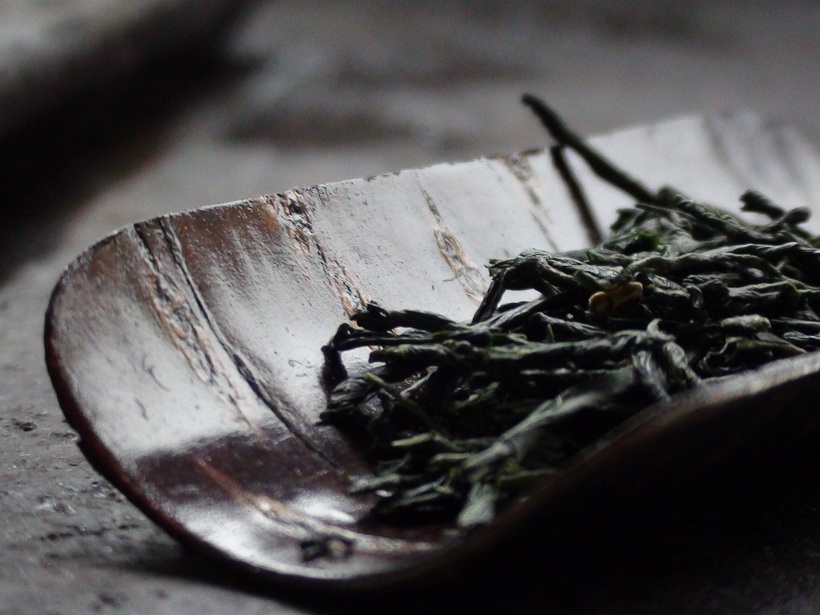
The appearance of these leaves seems to correspond with its chumushi processing – there are some longer needles, though most of them are quite short. Other than that, they are shiny, ranging from light to dark-green and with very sweet, fruity and almost caramel-like smell, somehow unusual for Sencha - I suppose this is a result of shading.


The first infusion is lively green in color, very clear and smells even sweeter than the dry leaves. Its taste, though, is quite different – very refreshing, light and not so sweet, with mild tones of nuts, slight spiciness and fruit – though, in this case, as opposed to the smell which reminded me of ripe fruit, in taste it's something young and refreshing. The aftertaste is medium-long, pleasantly mild and made of various nuances; hazelnuts, caramel and white grapes.

The second infusion is brewed with slightly hotter water and has a bit more opaque green appearance and sweet smell. This time, the taste is sharper, greener and even more refreshing than before, though I've noticed one thing while drinking this brew – while refreshing, this tea lacks the cooling character many Sencha teas have, especially during spring and summer. Instead, this one feels warmer, nuttier and even a little bit roasty. Once again, I think this might be a result of shading – and it indeed ads to the tea's unusual character. The aftertaste is very long, full, fruity and nutty with enhanced sweetness, when compared to the previous brew.


In terms of color, the third infusion is similar to the first, being light green and transparent. Its taste is crispy, nutty and roasty; compared to previous brews, it lacks most of the refreshing tones. Now, the main tone seems to be reminiscent of freshly baked bread, slightly sweet and mouthfilling. The aftertaste is shorter, though still very pleasant and offers the former sweet, caramel-like and ripe-fruit tones, mainly of plums.

One more infusion is prepared with significantly hotter water; its clear, light-green brew gives simple, slightly woody and roasty taste and quite a warm overall feeling.


This everyday Sencha is one of the teas making my wait for first teas of 2012 at least a little bit easier. I'm quickly running out of it, though; but then, it's already March, the sun is shining and fresh Chinese greens are soon to be seen (and tasted), I believe.


Tuesday, January 31, 2012

2011 Kim Jong Yeol's Jungjak Nokcha Butea


This sample was kindly sent along with my last order from Slovak shop Nomad.sk. It really made me happy – my previous encounters with Kim Jong Yeol's teas (such as this Balhyocha) were really an unusual experiences and of the four of his teas imported to Europe by Teamountain, this Jungjak (third picking) was the only green I haven't had a chance to try yet.

And since this sunny, windless day seemed ideal for such a tea, I have decided to give it a try now.

This tea originates in Yonggang-Ri, Hwagae-myeon, Gyeongnam – Hwagae Valley and was completely hand-picked and hand-made during the second week of May from 20 years old, wild tea trees.


The leaves are very good-looking; just slightly larger than those of Saejak (second picking) grade, curly and range from light, yellow-green to almost blueish in color. Their smell is very sweet, floral and, even quite a long time after the picking, still fresh. The preheated teapot enhances these sweet and pine-like fresh tones and reveals more, especially the roasted smell of bread.


The first infusion is light-green in color and just as light in taste, though, at the same time, very complex. Mainly dominated by gentle, flowery sweetness and tones of various fruit – pears and grapes, these notes are followed by once again very sweet, bread-like roastiness and pine-like freshness, which is, however, less vivid than in smell of the dry leaves. The aftertaste of this brew is mouth-filling, quite long and nutty-sweet.

The second infusion has a lively green color, is very clear and its most pronounced tone seems to be that of the roasted, sweet bread. Most of the former freshness is missing in this infusion, being replaced by complex, full tones of nuts, pears and berries. The following aftertaste is stronger than that of the previous infusion, once again quite roasty and bread-like, pleasantly remaining on tongue for a very long time.


The third and fourth infusions are somehow similar in character, being clear, lively green in color and still dominated by the sweet roasted tones of bread, which are now somehow finer than in the second infusion, where it reached the peak of its strength. These brews are creamy, nutty and complex, light and deep at the same time. Their aftertaste is moderately long, sweet and mouth-filling.

Few more brews are made of these leaves; gradually getting lighter, drier and less complex. Its main tones are nuts and bread, followed by remains of fruity sweetness and creaminess.


This tea, similarly to most of Korean green teas I've encountered so far, has a remarkable, almost meditative effect on my mind, putting it into a concentrated, but very calm state at the same time. This is one of the things I am most fond of in Korean teas and why I am always very glad to have a chance to try one.

So thanks again, for an opportunity to drink yet another of master Kim Jong Yeol's teas, which always seem to leave a memory of extraordinary session in my mind. Even now, when this green isn't in its freshest state anymore.


Saturday, January 28, 2012

2011 Horaido Gyokuro Fuuki


The sun is shining as I finally have enough free time for a proper tea session. Other than that, the air is still quite cold – days like these often make me want to drink Gyokuro.

Some of you may remember me talking about the 2010 version of Horaido's Fuuki – I enjoyed it a lot, just as I enjoyed practically all Horaido teas that I've tried up to this day. This traditional, Uji-based shop offers teas, many of which rank among my favorite Japanese-greens every year.

I purchased the 2011 version of Fuuki on my last visit to Brno's Probuzeny Slon teahouse and enjoyed it a couple of times since then, so I guess it's finally time for some notes.


After the package is opened, these typically beautiful, short and shiny dark-green needles emit that amazingly sweet, rich and complex smell so characteristic for a good Kyoto-style Gyokuro. This smell enhances as quite a big amount of these leaves is placed into the preheated Shiboridashi, revealing the pleasantly heavy, milky character.


Using traditional way of preparation, the first infusion is brewed with lukewarm water for four minutes and is yellowish-green in color, thick in consistence and very complex in taste. Within countless tones, umami is naturally the strongest one, followed by sweet milkiness, creaminess and less pronounced (compared to previously described MK Tsubokiri Gyokuro) but still detectable freshness. Next in line is a very interesting tone, reminding me of sweet melon – both yellow and watermelon.

This brew leaves long, heavy aftertaste in mouth, dominated by, once again, umami, noble sweetness and somehow creamy, hazelnut-like nuances.


The following infusion is prepared with a bit warmer water and shorter steeping time, resulting in a greener, less thick and very clear, transparent brew. Its taste is lighter and slightly vegetal, though the noble sweetness and umami remain the predominant tones. The refreshing tone is also significantly enhanced, compared to the previous infusion; so is the green, fruity-like character, now reminiscent of freshly picked green apples and grapes. The aftertaste is shorter, though still very sweet and complex, made of several tones, now especially those of various kinds of fruit.


One more infusion is prepared – with quite hot water and short brewing time, this is a light, nicely sharp ending of a session, now very refreshing, less deep and more straightforward and vegetal, though still practically without any unpleasant tones.

Eating some (or, in many cases, all) of the the spare leaves has became almost a routine part of my sessions with Gyokuros – these beautiful, still lively green leaves are no exception. Lacking bitterness, their mild sweet taste and lightness is a calming experience, prolonging the noticeably awakening, though, at the same time, mind-calming effect.


Wednesday, December 28, 2011

2011 Hwagae Uricha (Tongecha) at the Probuzeny Slon Teahouse


Visiting Brno, Czech republic, I'm once again sitting in one of my favorite tea-rooms here, mentioned several times on this blog – the Probuzeny Slon teahouse. At the moment, I am enjoying last infusions of a wonderful and unusual tea, one of those I wanted to try since the moment I first heard about it.

This tea is Hwagae Uricha (Tongecha), a Korean yellow tea produced by master Cho Yun Suk and imported by Teamountain. Quite an unusual Balhyocha for me, as it isn't loose – instead, this tea is pressed into the shape of a 100 gram ball and its appearance may be reminiscent of Pu-erh.

It's taste and smell is amazing – if someone would give me these dry leaves just to smell without seeing it, I would be tempted to say it's dark chocolate. Its taste is similar – wonderfully chocolate-like and sweet and it doesn't seem to get any bitterness even after long steeping times. As I gradually prepared numerous infusions, its smell and taste evolved, revealing more spicy tones, fruit, nuts, flowers and several other fragrances, making each infusion different.


Another thing worth mentioning – after a day of wandering through the winter city, this tea was exactly what I needed. As soon as I came to the teahouse and took the first sip, my body felt regenerated – and, immediately, warmed.

Unfortunately, I wasn't able to take a photo of its dry leaves, which were still in a pressed form. After the session, though, the leaves are beautiful – quite small, whole and ranging from dark-green to dark-brown in color.

This post isn't going to be any longer. I just felt the need to share this unusual tea-experience – at least like this.


Monday, December 26, 2011

2011 Tsubokiri Gyokuro by Marukyu Koyamaen


First of all, I would like to apologize – this blog was on an unexplained hiatus since the end of September. Among things that kept me busy is the fact that I have moved to a beautiful little village near Bratislava – this way, I can still keep close to the city, while the pluses are obvious – a garden, nature, calmness... drinking tea here during the warmer months is definitely going to be a wonderful experience. Then came Christmas and all things related to it – pleasant, but time-consuming.

I bought this Gyokuro back in November and enjoyed it a few times since then. As the package already indicates, it isn't a part of Uji's famous Marukyu Koyamaen's standard offering – Tsubokiri is a seasonal collection of teas released after Kuchikiri no Gi ceremony in October and sold only during October and November. Luckily, I was able to get one package of such Gyuokuro from Bratislava's Teatrade.sk store.

I've already talked about traditional storage and ripening of high-grade Japanese teas as well as the Kuchikiri no Gi ceremony last year with Horaido teas. Personally, I'm looking forward to such teas a lot every year – spring offering of Shincha is definitely amazing amazing, but autumn is my favorite season of Japanese tea; season when some of the best teas are released to the market.


These dark-green leaves are slightly more fragmented, short and reminiscent of short needles (or pins), indicating a medium-deep steaming (chumushi). Quite typically for many Uji-style Gyokuro teas, their appearance is a bit less shiny than that of high-grade Sencha.


Smell of these leaves is a joy; sweet, noble, deep and, at the same time, still notably fresh. As they are placed into the preheated Shiboridashi, more and more tones keep showing up – tones I would expect from a really good traditional Uji Gyokuro and, especially, one from Marukyu Koyamaen, as their Gyokuro teas seem to be characteristic enough to be distinguished from other producers (hard to explain, though).


As with all higher-grade Gyokuro, I've chosen the traditional way of preparation – big amount of leaves, small volume of lukewarm water and long steeping times.

This gives me three interesting infusions, first of which is greenish-yellow in color, just slightly opaque and very aromatic. Its taste is heavy, rich and full of nuances; milky, sweet tones and umami, pine-like forest freshness and ripe fruit. The aftertaste is long and mouthfilling, very deep and sweet without traces of bitterness. This taste really is noble and special – this is one of those teas that you can feel in your mouth hours after you've finished drinking it – maybe even all day long. Similarly most traditional Gyokuros stored until autumn, Tsubokiri has a significant body-warming effect as well as a vivid awakening one, waking up the senses and enhancing mind's ability to focus. And with such a tea, it is definitely important to completely focus on the session itself.

The second infusion, prepared with slightly hotter water and shorter brewing time, is greener in color and more transparent. Now, the taste is a little lighter than before, though still very deep and sweet; the milky tone, umami and sweetness are accompanied by more pronounced, sharper note of fruit (especially grapes and pears) and a very slight spiciness. The aftertaste, though, is still predominantly sweet and milky – and, seemingly, even vivider and longer than that of the first infusion.


One more brew is prepared – while this one may be the lightest and not that deep at all compared to its predecessors, it appears to be a very pleasant refreshment after two very heavy infusions. This one is sharper, lighter and somehow fresher, with shorter aftertaste and tones of nuts, spices and fruit.

Uji has been my favorite tea-producing area for years and this tea once again proved to remind me why I am so fond of it. A traditional, ripened Gyokuro of this kind is a tea worth special opportunities – at least in my eyes.